
Midlife metabolism: what really changes for women after 40 (and what you can do about it)
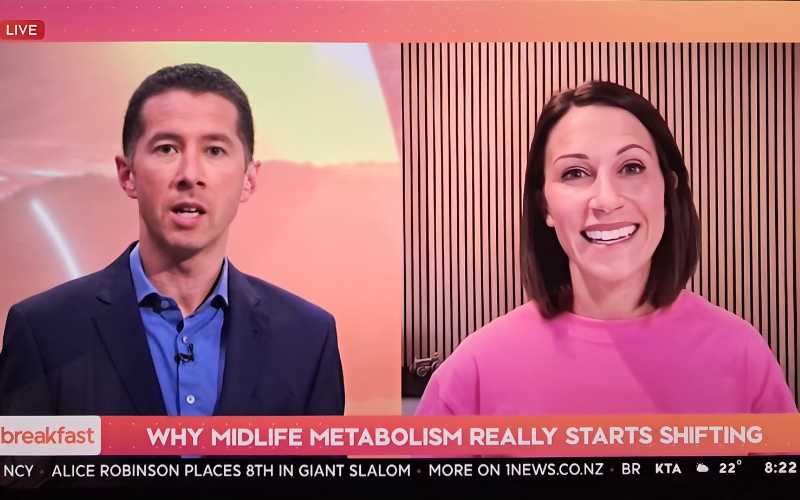
[Published on www.1news.co.nz 15th Feb 2026 and discussed live on the TVNZ Breakfast show on 16th Feb 2026]
Why does weight and body composition often change after 40?
Weight gain in midlife isn’t simply caused by a “slowing metabolism”. Age-related loss of muscle, changing activity levels, sleep disruption and hormonal changes during perimenopause can all play a part. The good news is that strength training, adequate protein, nourishing food, good sleep and regular movement can help support muscle, metabolic health and long-term wellbeing.
I recently returned from a trip to the UK, doing mammoth, crammed-in catchups with family and friends that are often the norm when you live on the other side of the world.
While travelling here, there and everywhere for a month, trying to fight jet lag and getting very sick of eating on the run, I found myself having the same conversation over and over again with my forty-plus-year-old friends.
The juggle of work, kids, caring for ageing parents, and the fog of a perimenopausal brain is intense in this phase of life. Plus, on top of all that, despite eating and exercising the same, the frustration of clothes getting tighter and weight gain around the middle was a strong theme of conversation.
We hear the same story all the time from our midlife clients at Mission Nutrition, and being in my mid-forties myself, I know this first-hand too.
Research also confirms that this is not just in our heads. A recent, rigorous systematic review completed by the International Menopause Society clearly highlighted that weight gain and body composition changes are common among women in midlife. So if you’re experiencing this, you are not alone.
But why does this happen? And, more importantly, what the heck can we do about it?
Why muscle matters for metabolism after 40
As we age, we gradually lose muscle unless we actively work to maintain it. Muscle is a very metabolically active tissue, which means it’s ‘hungry for energy’ and burns fuel (calories from the food and drinks you have) not only when you’re moving, but also when you’re sitting at your desk working or chilling on the couch after a big day.
The more muscle you have, the more efficient your body is at using energy. The less muscle you have, the less effective you are at burning fuel and, you guessed it, the easier it can be to gain weight in the form of body fat.
But fear not, this muscle decline is not inevitable. Phew!
Including regular strength (or resistance) training, along with adequate protein based on your needs at this stage of life, can significantly slow and even reverse muscle loss and the metabolic slowdown that comes with it.
On the training front, there’s plenty of debate about how often, how heavy and how hard you need to go, but the bottom line is this: some strength training is better than none.
If you are new to strength training, aim to include bodyweight exercises at home, resistance bands, Pilates, gym-based weights or online programmes at least two times per week as a good place to start, building up from there. This also needs to be combined with the recommended minimum of 150 minutes of moderate-intensity exercise per week.
One challenge I personally appreciate is fitting in exercise during this chaotic life phase, but if you’ve been stuck in the mindset that anything less than an hour “doesn’t count”, it’s time to challenge that thinking.
Can’t see how you could fit in two longer resistance workouts a week? Break it down. Do 5-10 minutes a day instead, or 15-20 minutes if you can. Whatever fits into your life is better than not doing it at all. If you’re able to exercise at the same time each day, that can really help anchor it as a habit too.
When it comes to protein, if your social media algorithm looks anything like mine, you’ll be seeing cottage cheese recipes everywhere and protein powder added to just about everything as a woman in your 40s. But don’t let this overwhelm you or feel like you have to jump on those trends. You can get enough protein from whole foods you probably already have at home, without making it a full-time job.
Aiming for somewhere around 20-30g of protein per meal, with some protein in your snacks (if you have them), is a good place to start to help preserve muscle mass and keep you feeling fuller for longer. Individual needs vary depending on your weight and activity level, so for personalised guidance, a Dietitian or Nutritionist can help.
If you want help working out what 20-30g of protein looks like in real food, you can grab this free protein guide here.
Both strength training and adequate protein intake are also crucial for bone health, which can come under pressure during this stage of life. An added benefit of focusing on these.
Understanding the hormonal shifts
Another big change is the shift in our hormones, which can impact almost every aspect of our bodies, from our brains and bladders to our hair and shoulders (frozen shoulder anyone?!), as well as where we store fat.
During perimenopause (which can start, on average, 7-10 years before your final period), oestrogen levels can swing around wildly while trending towards an overall decline. Progesterone and testosterone levels are affected too. These changes can alter fat distribution, often shifting it towards the middle.
Enter tighter undies, jeans that don’t fit like they used to, and the feeling of becoming more apple-shaped than pear-shaped.
At the same time, insulin sensitivity can also decline with age and changing body composition, although this varies considerably between individuals. When insulin resistance increases, blood glucose can creep up, and the body becomes more likely to store fat. Something people with PMOS (previously known as PCOS), prediabetes and type 2 diabetes may already be familiar with.
While there are things you can do (and I promise I’m getting to them), it’s also important, albeit hard to recognise that this is a normal phase of life.
Despite our desire to fit into the same jeans we wore in our 30s, some degree of physical change is likely. It’s worth asking yourself how far you’re willing to go to chase a particular dress size, because for many women this stage of life requires more effort, more restriction and more stress than it did before and that can become unhealthy.
Some acceptance and compassion towards your changing body is often necessary, alongside taking care of your physical and mental health.
In terms of what you can do to help with these hormonal shifts, once again, physical activity is a priority. As well as improving how you feel, it can also improve your sensitivity to insulin, meaning your body is better able to manage blood sugar levels.
What and how you eat will also make a big difference. While it’s tempting to think that simply eating a lot less or following the latest diet trend will be the answer, what worked before often doesn’t work anymore, so it’s time for a different approach.
What should you eat during perimenopause?
Focus on nourishing your body rather than starving it. Load up your plate with two or more handfuls of lower-starch vegetables at lunch and dinner, adding extra veg for snacks where you can, ticking off your protein as mentioned above, and choosing quality carbohydrate sources. You may also find that slightly reducing refined carbs and replacing them with vegetables works better for you. Think oats, starchy vegetables, pulses, and brown rice over more processed options.
The timing of your eating can also be helpful to consider. Keeping your food intake within an 8–12 hour window may be beneficial for some people.
Why sleep matters for appetite and metabolic health
Sleep disruption is incredibly common during perimenopause and menopause. Middle-of-the-night waking, feeling hot, or multiple trips to the bathroom, sound familiar?
Poor sleep can increase insulin resistance and disrupt appetite hormones, leaving you feeling hungrier, less satisfied after meals, and craving quick-fix carbs or salty snacks.
Here are some practical steps that can help:
Use a good eye mask to minimise disruptions when you wake
If you get up to the toilet, avoid turning on bright lights, motion-sensor night lights can help
Don’t check the time during the night; it fires your brain into action and can trigger anxiety
Remind yourself that rest is still restorative, even if you’re not asleep
If you’ve been awake for a long time, get up briefly, cool down, then return to bed
Be mindful of caffeine and alcohol, both of which can wreak havoc on sleep during this phase of life
Frequently asked questions
Does metabolism really slow down during menopause?
Metabolism changes gradually with age, but menopause is only part of the picture. Changes in muscle mass, activity, sleep, body composition and hormones can all contribute.
Why does weight tend to shift around the middle?
Hormonal changes during the menopause transition can influence where body fat is stored, while age-related changes in muscle, activity and insulin sensitivity may also play a role.
How much protein do women over 40 need?
Protein needs vary depending on body size, activity and health, but including a source of protein at each meal can help support muscle and fullness.
Can a Dietitian or Nutritionist help with perimenopause weight gain?
Yes. Individual support can help you look at your overall eating pattern, protein intake, activity, sleep, symptoms and health history, rather than simply cutting calories or following another restrictive diet.
To summarise, what can help support metabolism and body composition in midlife?
Regular resistance or strength training
Enough protein across the day
Plenty of vegetables, fibre-rich carbohydrates and minimally processed foods
Regular everyday movement
Prioritising sleep where possible
Managing alcohol and caffeine if they are affecting sleep or symptoms
Seeking personalised support if weight, appetite, blood glucose or symptoms are becoming difficult to manage
For some women, Menopause Hormone Therapy (MHT/HRT) may also be part of the conversation, particularly when symptoms like sleep disruption, brain fog, hot flushes or mood changes are affecting quality of life as well as impact how you eat and your motivation to exercise. If you’re not feeling like yourself, reach out and have a conversation with a knowledgeable GP who is up-skilled in this area of midlife and menopause. Please don’t feel like you have to suffer through challenges alone.
Want personalised support?
If changes in weight, energy, appetite or eating during perimenopause are frustrating you, our NZ Registered Dietitians and Nutritionists can help you work out what matters for your body, health and lifestyle. We offer personalised support throughout New Zealand via online consultations, as well as in-person appointments in Auckland, Tauranga and Christchurch.
Written by Claire Turnbull BSc (Hons) Dietetics UK, NZ Registered Nutritionist, Dip Positive Psychology